
Infernal Affairs II <<无间道II>> is no different from other sequels (although it’s a prequel) in that it has huge shoes to fill and high expectations to meet. In that respect, it both succeeds and misses the mark – mainly because it gives us more of the same (exactly what the audience ostensibly wants) while also upping the intensity of those elements and missing the mark a little. It tells the tale of how things came to be in the first film, and reminds us of the inevitability of change – and how transitions are so important in life and in stories.
Synopsis
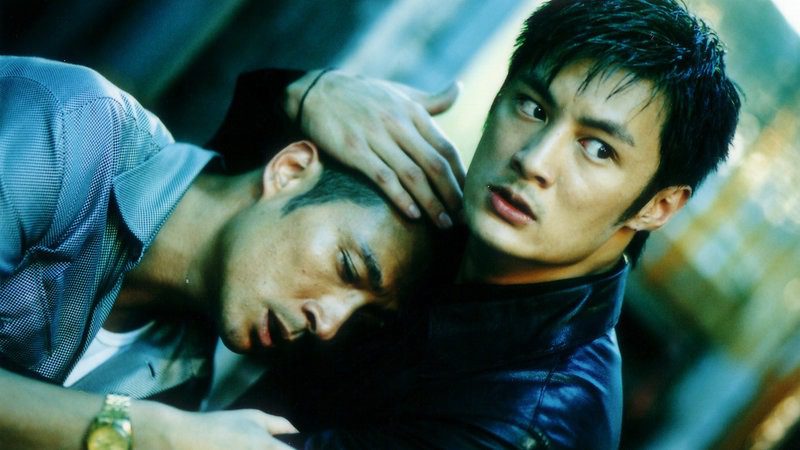
Infernal Affairs II <<无间道II>> is a Cantonese action thriller that is a crime drama that serves as a prequel to 2002’s Infernal Affairs. The film will be referred to as Infernal Affairs II henceforth.
The film covers three time periods: 1991, before Lau Kin-ming infiltrates the police force as a mole for the triads and Chan Wing-yan infiltrates the triads as a mole for the police; 1995, which sees the rise of a powerful new crime lord in Hong Kong; and 1997, which shows how the characters get to their positions in Infernal Affairs.
Infernal Affairs II was first released on 1 October, 2003.

Directors: Andrew Lau & Alan Mak
Writers: Felix Chong & Alan Mak
Cast:
- Anthony Wong (Wong Chi-shing)
- Eric Tsang (Hon Sam)
- Carina Lau (Mary)
- Francis Ng (Ngai Wing-hau)
- Edison Chen (Lau Kin-ming)
- Shawn Yue (Chan Wing-yan)
- Hu Jun (Luk Kai-cheung)
- Chapman To (“Dumb” Keung)
- Roy Cheung (Law Kai-yin)
- Kelly Fu (May)
- Chiu Chung-yu (Mary)
- Tay Ping Hui (Hung)

The Hong Kong handover symbolism
In Infernal Affairs II, the handover of Hong Kong looms as a major event that all parties are anticipating with trepidation. In fact, the film concludes with the handover that both the police and triads have been waiting for with bated breath.
The parallels to the story couldn’t be stronger. As the handover occurs, power transfers to Hon Sam (Eric Tsang) and Wong Chi-shing (Anthony Wong), setting up the events of Infernal Affairs, While there’s no commentary on which governance is preferred (for obvious reasons), the idea of change and shifting tides is clear. It’s a clever idea that helps cement the realism of the story, by tying it to historical events, and reminds us that all this change is what resulted in the plot of the first movie.
Strong Hong Kong flavour
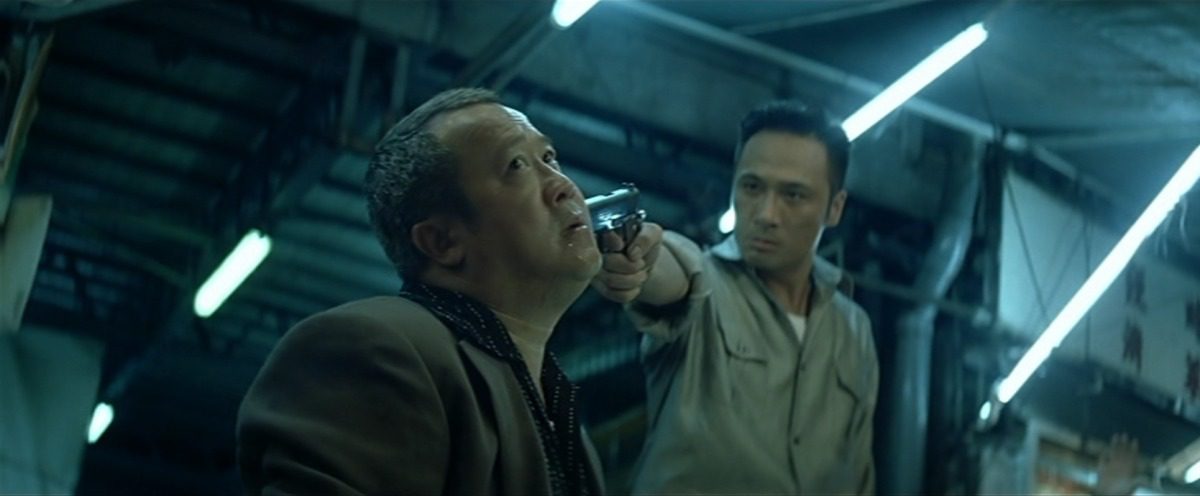
More so than the Infernal Affairs, Infernal Affairs II name drops Hong Kong streets, as well as having major scenes shot at famous locations. Given that the first film already did such a magnificent job of giving you a sense of Hong Kong life, this movie goes a step further by entrenching you in named locales, treating you like a local in its unabashed views of iconic places. It’s the sort of film that will make you want to go to Hong Kong for a visit, and possibly make you fall in love with the city.

Infiltration and deception galore
If the complex web of lies and mind games attracted you in the previous movie, there’s more of the same here. It’s no longer just two moles against each other – there’s a whole interconnected network of spies working against each other, on different levels. It helps that there’s a new antagonist, Francis Ng’s Ngai Wing-hau, that acts as a third player on the board (thus giving all parties more room to manoeuvre and infiltrate each other’s organisations).

Heavy reliance on dramatic irony
The film assumes you watched Infernal Affairs, and plunges in with a friendly scene between Wong Chi-shing and Hon Sam, evoking that sense of tragedy since you know they end up as bitter enemies later on. Infernal Affairs II is replete with such situations, creating the sort of dramatic irony that can only be garnered from the audience knowing exactly how everything will play out. It does mean that newcomers to the franchise will be confused, and that this is not a standalone film. But it’s unlikely that you’re watching this without having first viewed its predecessor.

Intense audio and visuals
One thing that I observed in this film is the unbelievable number of close-ups that every character has (and then some). It’s to heighten the gravity of the situation and to depict the emotional turmoil of each character (in keeping with the theme of the title) – but it can get a little bit much at times and eventually becomes predictable. Similarly, the score is much grander than the first, and rises to a crescendo at every momentous beat. After a while, it becomes grandiose rather than grand, and to an extent, also predictable. But in that sense, the film is far more larger than life than Infernal Affairs, which is what many sequels do.
Edison Chen & Shawn Yue should have played each other’s characters
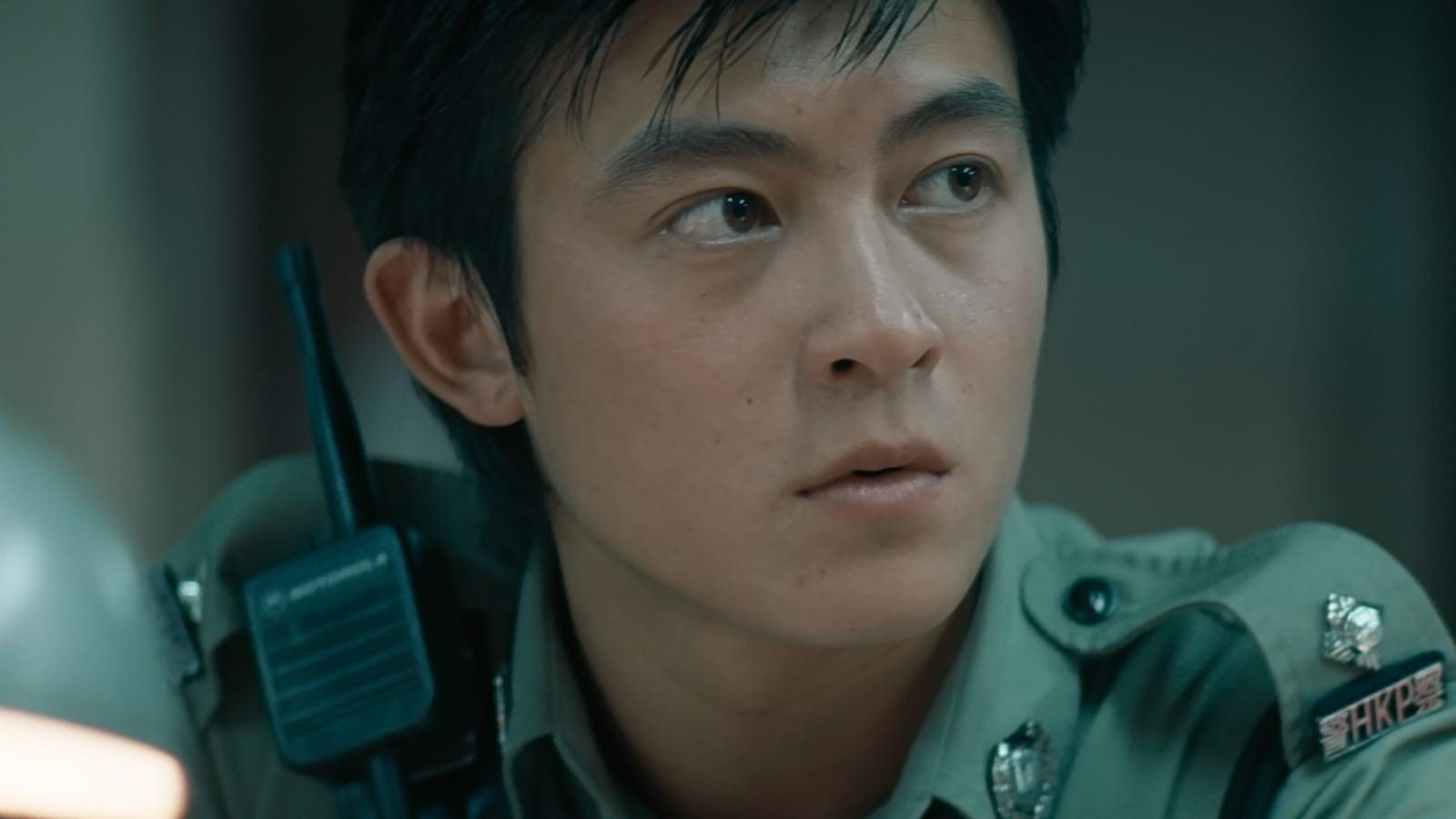
Edison Chen plays a young Andy Lau in the form of Lau Kin-ming, while Shawn Yue plays a young Tony Leung in the form of Chan Wing-yan.
But they should have swapped characters.
You see, Edison Chen’s expressiveness is more on par with that of Tony Leung’s, while Shawn Yue’s muted behaviour feels more like that of Andy Lau. That means that you subconsiously think you’re watching young Lau Kin-ming when you’re actually watching young Chan Wing-yan (and vice-versa). When coupled with the fact that they’re all infiltrating each other’s organisations and pledging fake allegiances, it can be tricky to get a hold on the story. But since they’re reprising the characters they played from the first film, there’s little that can be done here.
Then again, the film isn’t really about them – it’s about Wong Chi-shing and Hon Sam. So their screentime isn’t enough to make it a constant distraction, although scenes dedicated to them can be tougher to follow.

Should you watch Infernal Affairs II?
You should definitely catch Infernal Affairs II – after you’ve caught the first Infernal Affairs, of course. It’s more of the same action, dialled up to 11, and fleshes out the backstory of all the characters with stronger motivations. It colours the interactions of the characters from the first film, given that you know the history that they now possess. As a prequel, you know that all new characters introduced here are doomed, so there’s a little bit less tension in that aspect. But it more than makes up for it with its dramatic irony, showing how foes were once friends. And by hanging it all on a historical event (the Hong Kong handover), the film cements its position as a story worthy of its place in Hong Kong cinema.
Score: 7/10
Infernal Affairs II is available on Netflix.
You might also want to read:

Leave a Reply