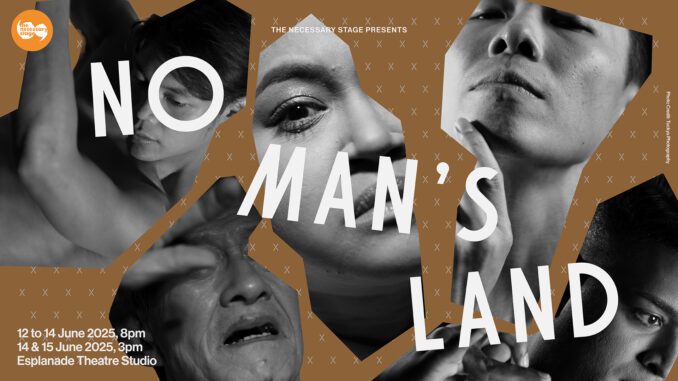
What does it mean to “be a man” in contemporary society?
“It’s an elusive and evolving concept – layered, shifting, and hard to define. So much of it is shaped by societal expectations of how a man should behave, which we’re all familiar with to varying degrees,” said Sim Yan Ying “YY”, co-director of No Man’s Land.
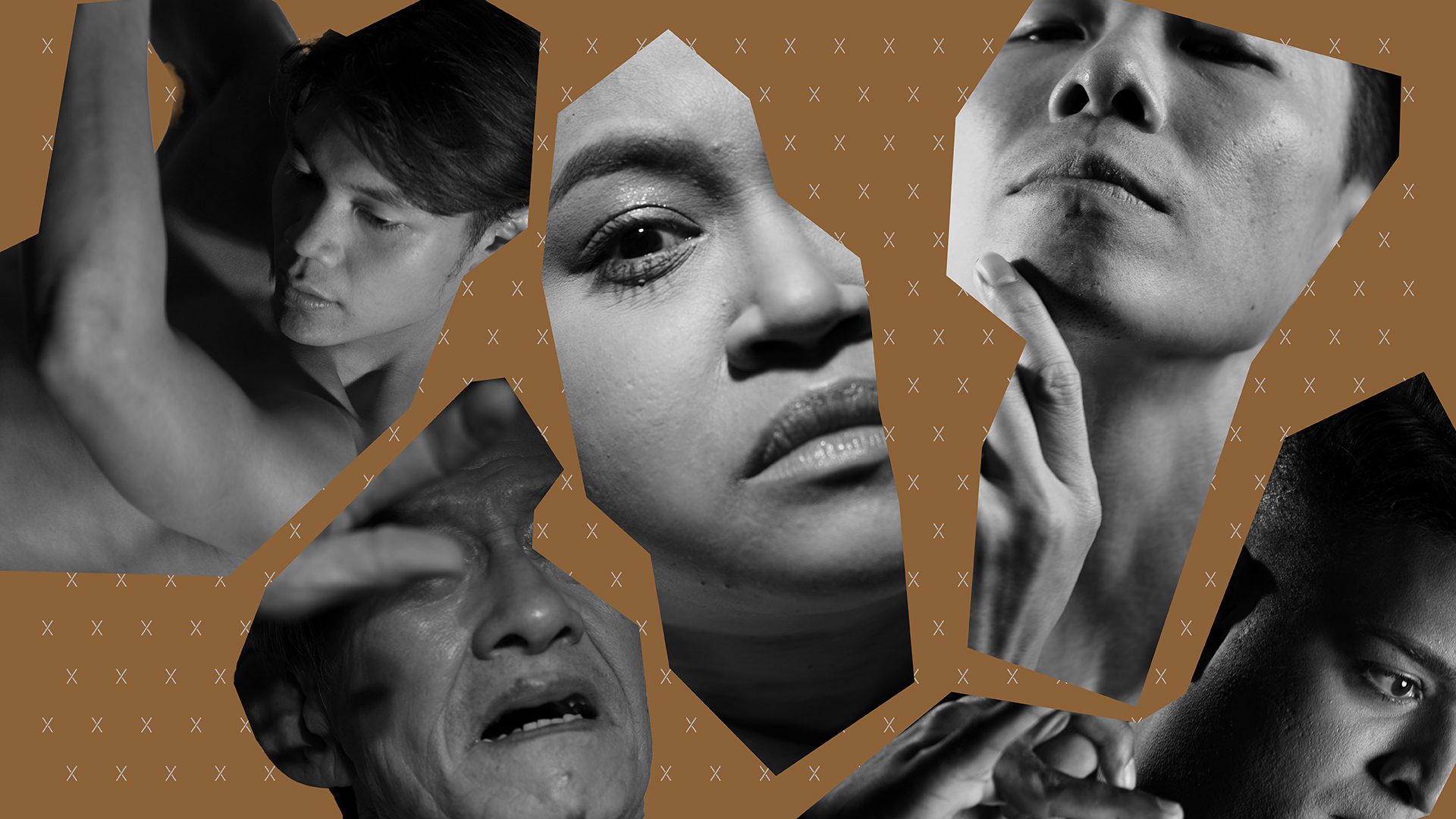
No Man’s Land, a devised interdisciplinary work by The Necessary Stage, examines masculinity as a contested, complex terrain. The production blends dance, movement, text, and sound to explore how men navigate identity, emotions, culture, and power amidst shifting gender norms.
“The term ‘masculinity’ has never been static across time and different cultures,” observed playwright Danial Matin. “The recent rise of Tateism is itself troubling, though perhaps unsurprising given the challenges of dealing with newfound complexities and ambiguities.”
Tateism refers to the ideology of Andrew Tate, a former kickboxer. It is associated with hyper-masculinity, misogynism, and patriarchy in discussions on the manosphere.
“We should not conflate masculinity with patriarchy. Masculinity can be redeemed and is definitely healthy,” shared Alvin Tan, co-director of No Man’s Land. “If we demonise masculinity, then we become man-bashers and lose faith in humanity.”
The interdisciplinary approach
Indeed, No Man’s Land is not another commentary on toxic masculinity. Rather, it’s about exploring the contradictions of manhood – the conflict between aggression and tenderness – from an interdisciplinary approach which blends dance, movement, text, and sound.
“The interdisciplinary approach relied heavily on creative chemistry, openness, and trust,” said YY, who shared creative leadership with Alvin, Danial, movement artist Hafeez Hassan, and sound artist Jing Ng. “Hafeez conducted movement explorations, Danial developed draft texts as springboards, Jing spearheaded sonic explorations, while Alvin and I facilitated character-driven scenarios.”
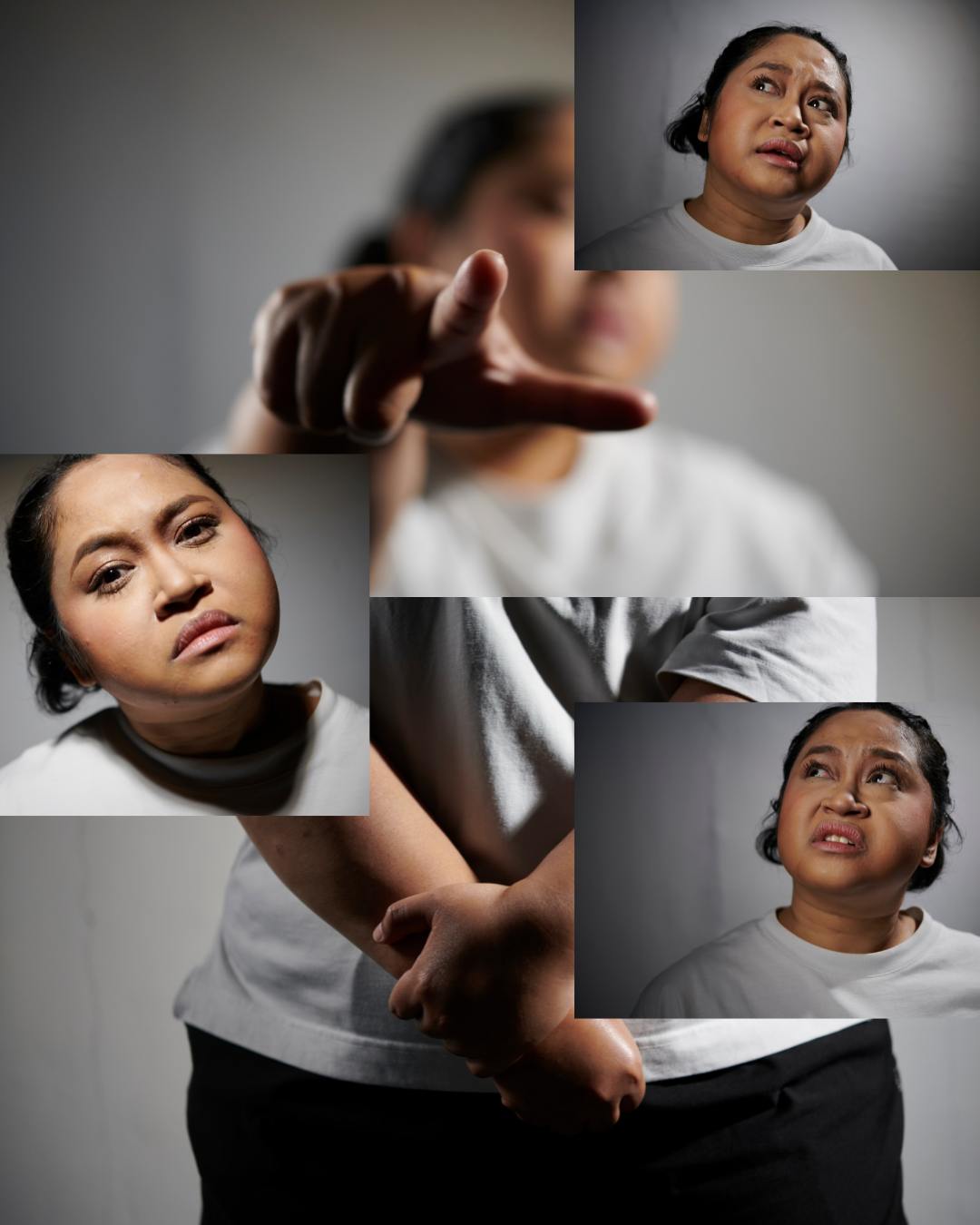
This collaborative approach meant that new ideas often arose organically and spontaneously. “For instance, during a movement improvisation led by Hafeez, Danial suggested inserting a monologue from the perspective of a woman whose photos were shared on SG Nasi Lemak – a now-defunct Telegram chat group known for sharing obscene and voyeuristic content – and having a performer step out to read it mid-sequence,” recalled YY.
And it all comes down to interdisciplinarity as a form. “It’s closely tied to the idea of masculinity and the energies of both genders need to be present when doing interdisciplinary work,” remarked Alvin. “YY contributed not only through content, but also through the methodology of her directing.”
“For me, her approach feels distinctly feminist because she practices it with integrity and inclusivity. YY consults and listens, but she also makes clear decisions rooted in strong aesthetic convictions.”
Perspectives on masculinity
YY shared her perspective on the topic. “Having worked on many female-centric productions, I also began to feel a pull toward examining ‘the other side’. It’s all deeply interconnected – men play a key role in upholding or challenging the systems that reinforce inequality. If feminism is about freeing all of us from restrictive roles, then we also need to talk about how masculinity is conditioned, and how it can be reimagined.”
Her interest in the subject matter came from years of observing close male figures in her life. “I’ve seen how harmful expressions of masculinity can affect not just the people around them – including women and gender-nonconforming individuals who are often dehumanised or dismissed – but also the men themselves. The pressure to meet impossible standards, the repression of emotion, and the inability to live authentically can be deeply damaging.”
For Danial, what scares him is “how little we understood where these masculine ideals came from, and yet blindly adopting them and imposing them upon others. This hurts everyone; women, children, men included.”
Similarly, Alvin opined that “what irritates me about some ideas of masculinity is how inflexible they can be, how they’re conflated with ‘integrity’ or ‘principle”’. Sure, we want to believe in principles, and my generation often operated that way, but I think it’s good to work on being receptive in conversation and dialogue. At the same time, we need to think about when we should truly listen to someone whose convictions are different from ours.”
These perspectives came together in a conversation between YY and Daniel about how men navigate the world so differently, often shaped by their upbringing, personal fears, and societal expectations – and what struck them was how often these moments were rooted in insecurity or the need to prove something. Then, when Alvin invited them to collaborate on a main season production with The Necessary Stage, it felt like the right moment to create something.
And so, No Man’s Land was born.
Conceptualisation and writing
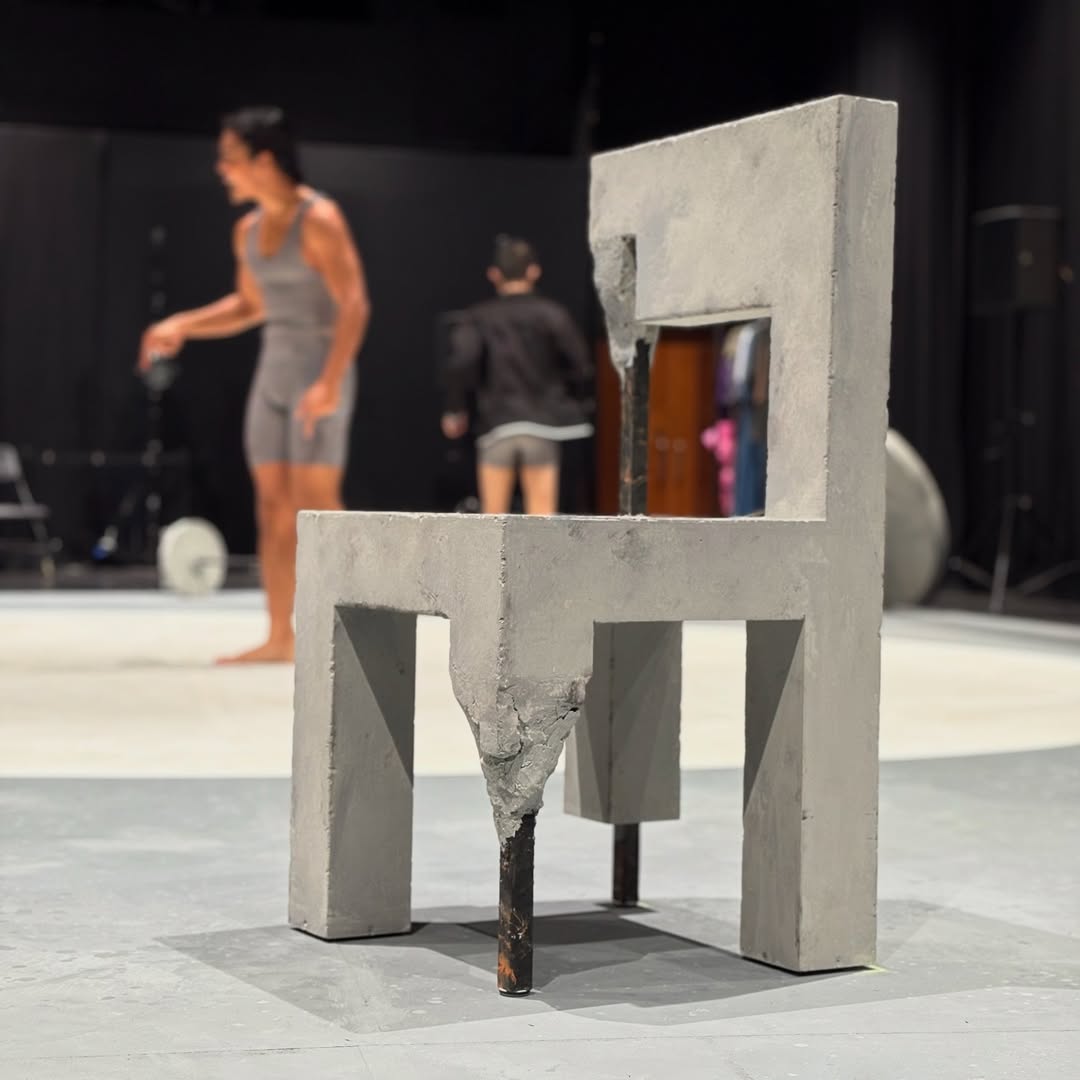
It was Danial who landed on the title No Man’s Land for the production. “The metaphor felt layered and resonant. Masculinity is so often associated with aggression, war, violence. And this phrase ‘no man’s land’ just opened up all these meanings.”
“Additionally, the title to me also points to the inherent instability of masculinity as a construct – how, despite efforts to claim or dominate it, the concept resists fixed ownership. It demands ongoing reflection and dialogue,” said YY.
In the writing of it, Danial discovered that “the characters in this piece, like so many men, are all trying to stake a claim on masculinity, to find their way through it and find a sense of dignity.”
No Man’s Land follows four main male characters. “There’s the softspoken 76-year-old man with his vulgar 30-year-old son; and the son has a seemingly cocksure gym-going companion who himself discovers a newfound friend who’s struggling with body image issues. Playing an equally important role are the women adjacent to these characters, the (absent) wife, the call girl, the mother, and the trauma-bonded sister,” Danial explained.
Takeaways
An exploration of such a weighty topic means that audiences hopefully leave with new insight, perspectives – or even just a different emotion. What would the crew like the audience to take away from No Man’s Land?
Alvin hopes “that they reflect on what hopes that can be for healthy masculinity and it’s not always about emasculating the male to disempower them in order to be empowered.”
“I hope audiences leave with a little more courage – the courage to challenge sexism and toxic masculinity when we see them, and the courage to be true to ourselves in the face of gendered expectations,” said YY.
Daniel would like audiences “to unsettle normative versions of masculinity and question the costs of protecting, and/or challenging our versions of masculinity.”
And for Hafeez, it’s for audiences “to comprehend the causality behind behaviors in men and identify the attributes that contribute to them.”
No Man’s Land runs from 12 to 15 June at Esplanade. Tickets available here.
- Co-conceptualised and Co-directed by Alvin Tan and Sim Yan Ying “YY”
- Written by Danial Matin
- Choreographed by Hafeez Hassan
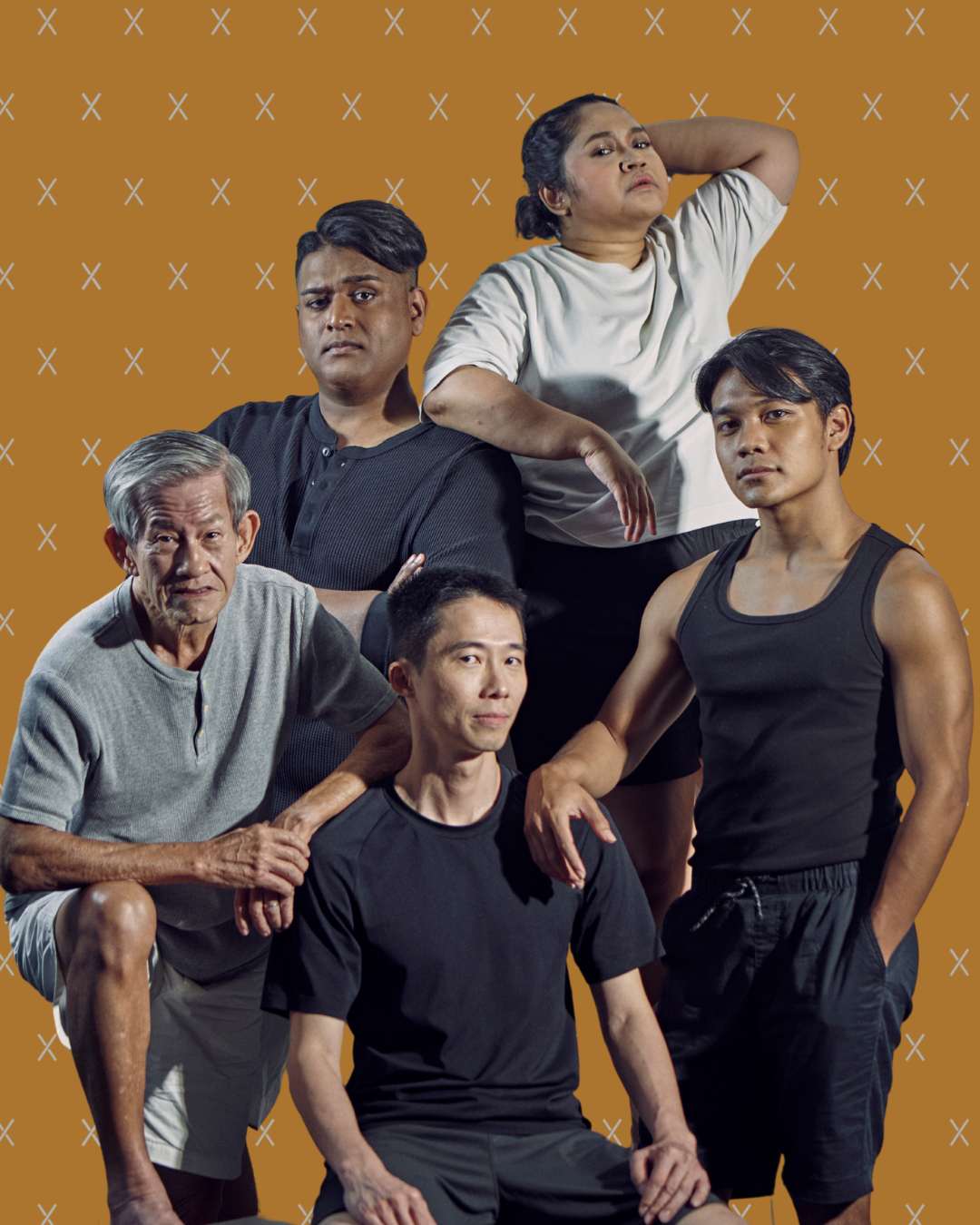
- Performed by Michael Tan, Neo Hai Bin, Shahizman Sulaiman, Suhaili Safari, and Vishnucharan Naidu
- Dramaturg: Lim Shien Hian
- Set Conceptualiser: a.syadiq
- Set Coordinator: A Kumarran
- Lighting Designer: Tai Zi Feng
- Composer & Sound Designer: Jing Ng
- Costume Designer: MAX.TAN
- Creative Captioner: Su Paing Tun
Leave a Reply