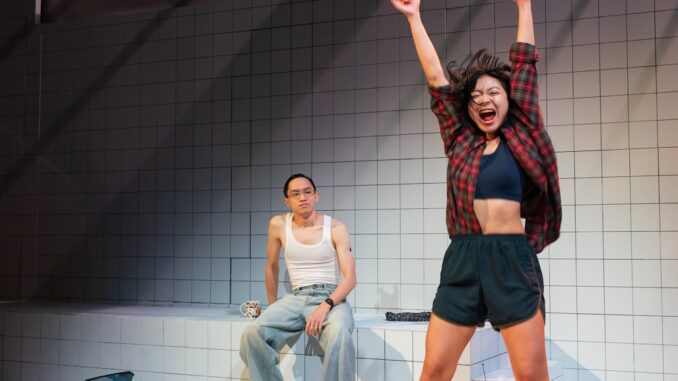
Party (I had my share of clubbing days). Techno (I like video game-ish music). Serangoon Gardens (close to my hood). 1993 (my childhood). What’s there not to like about a production spectacularly titled The Serangoon Gardens Techno Party of 1993? Even the synopsis teases you with the words sex, drugs, and rebellion.
Sadly, I was overseas then so I didn’t manage to catch it (thank you for the invite, Wild Rice!) but the concept of it was so intriguing that I asked many questions about it. The creative forces behind the production, Joel & YY, very graciously satiated my curiosity.
And here it is – they reveal what The Serangoon Gardens Techno Party of 1993 is all about, what it means to them, and other nifty little bits you never knew.
Synopsis
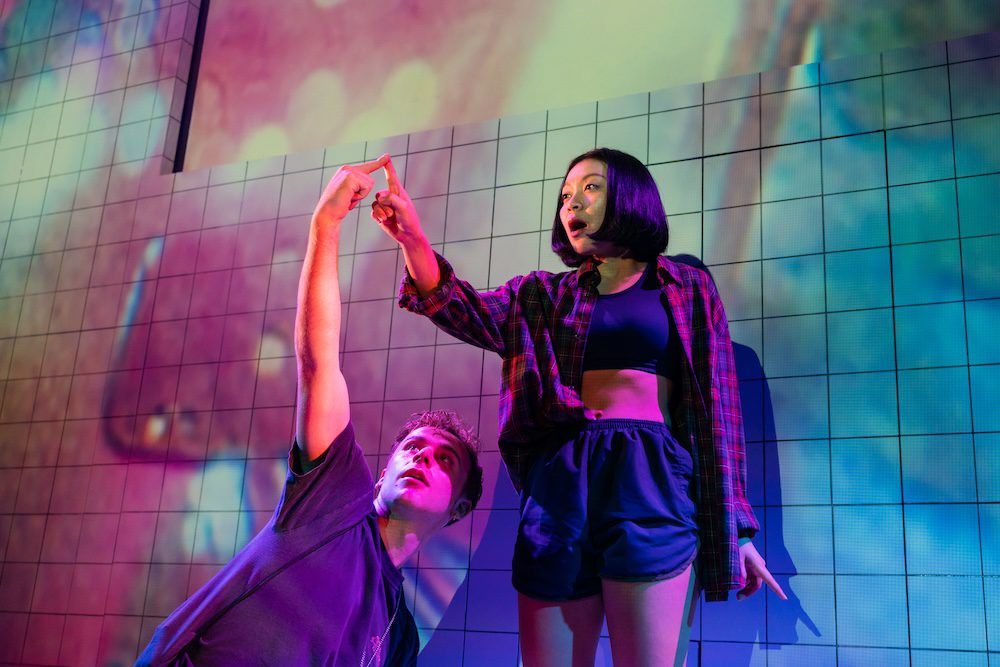
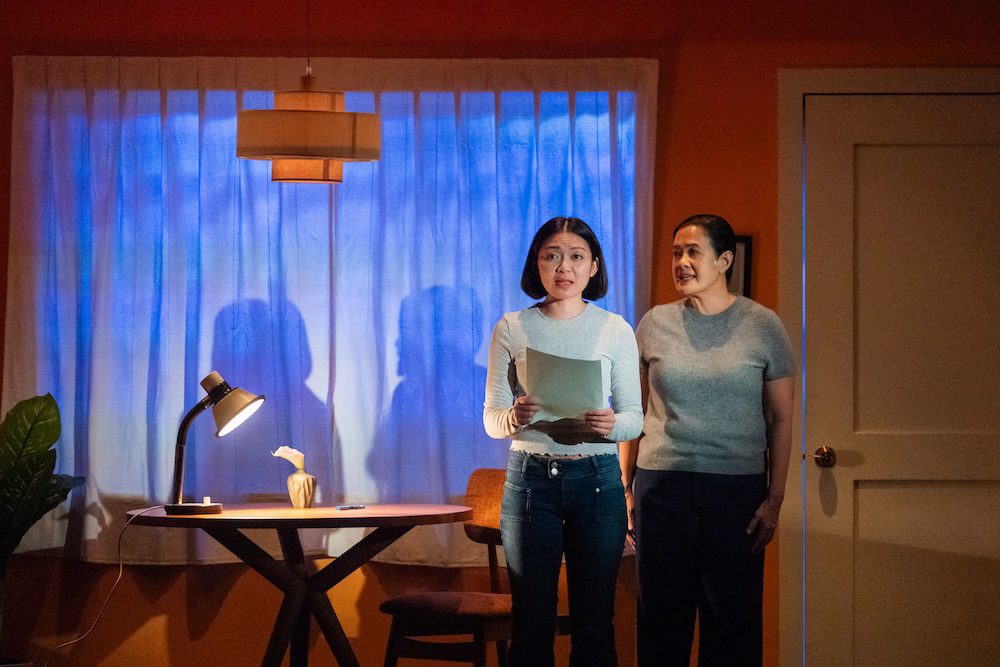
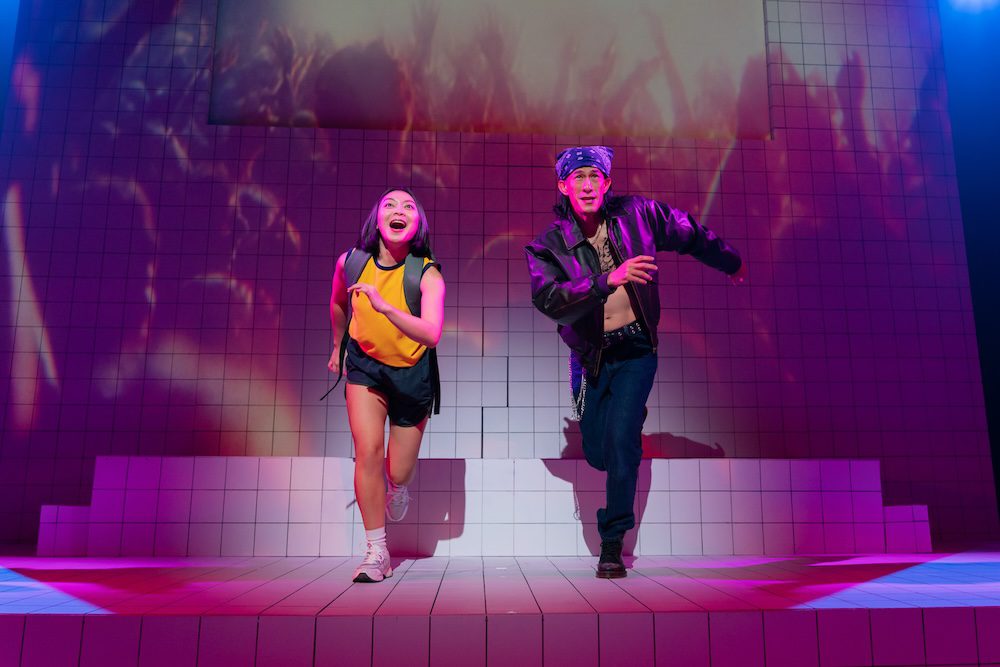
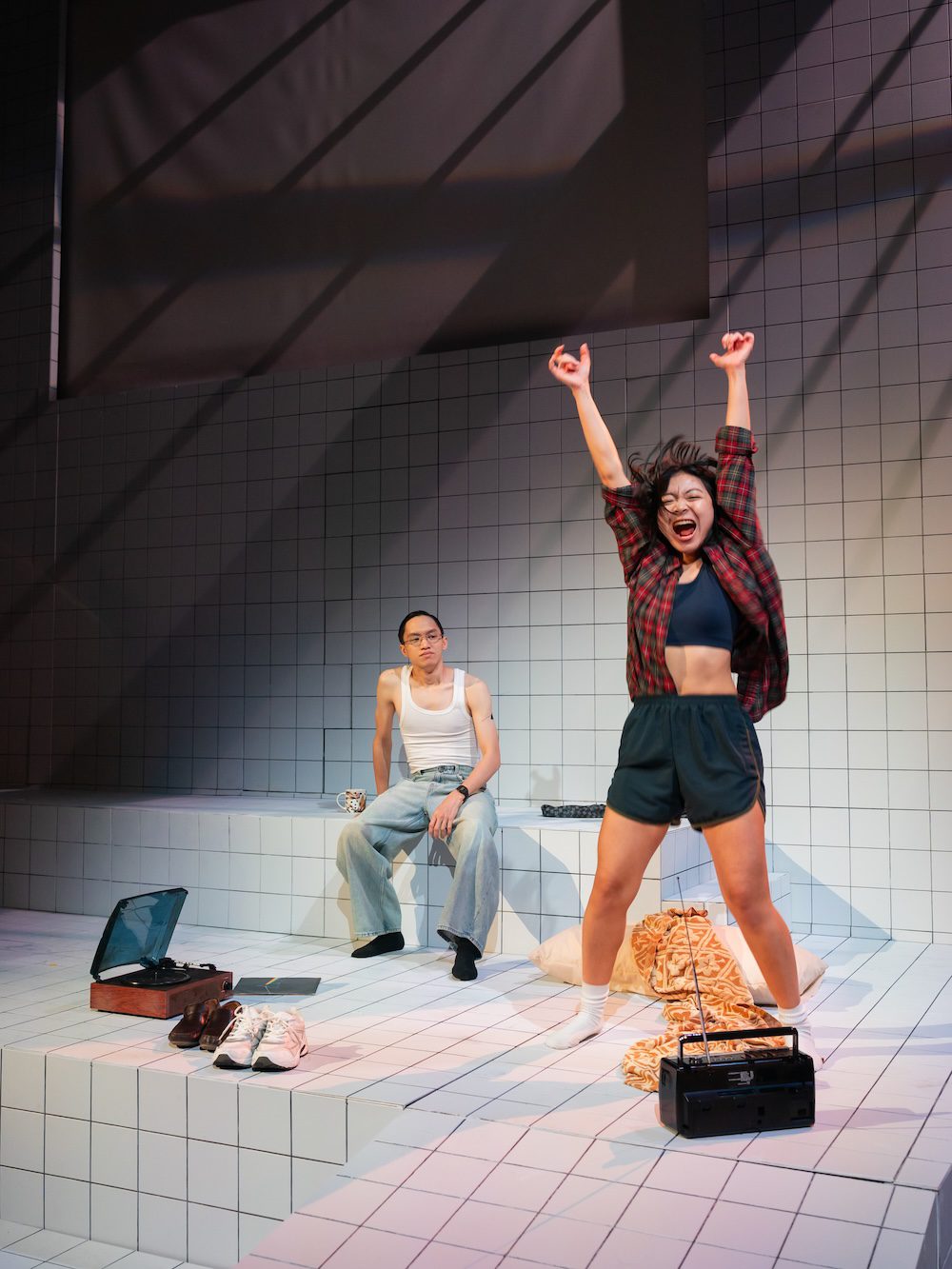
It’s 1993, and 16-year-old Candice, in her nice house in her nice neighbourhood in Serangoon Gardens, wonders why the city around her seems so sleepy and lame compared to the world she glimpses in MTV and her music magazines – pictures roiling with sex, drugs, and rebellion.
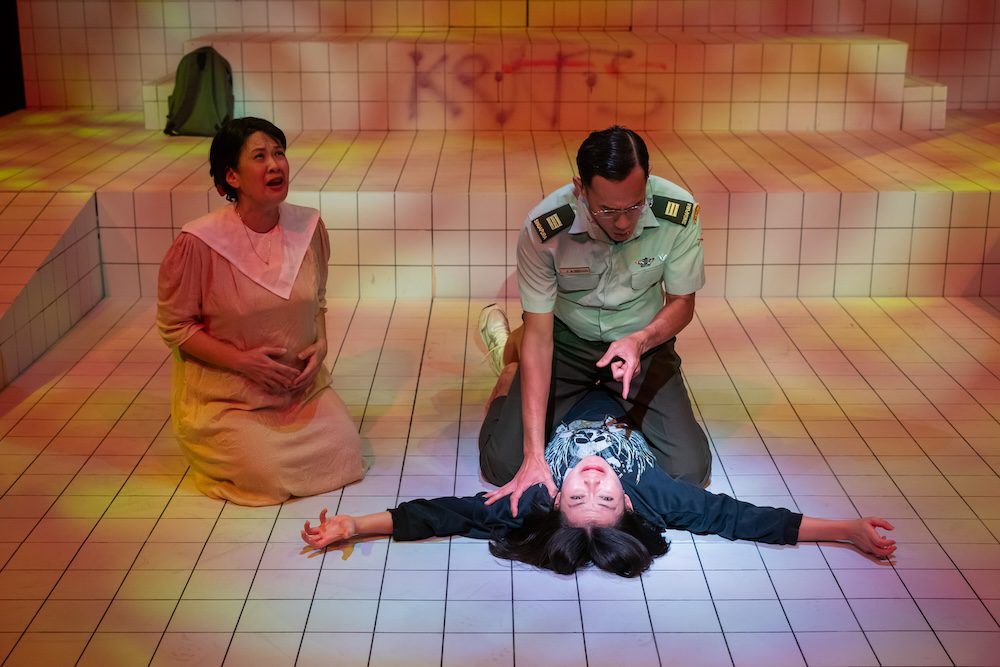
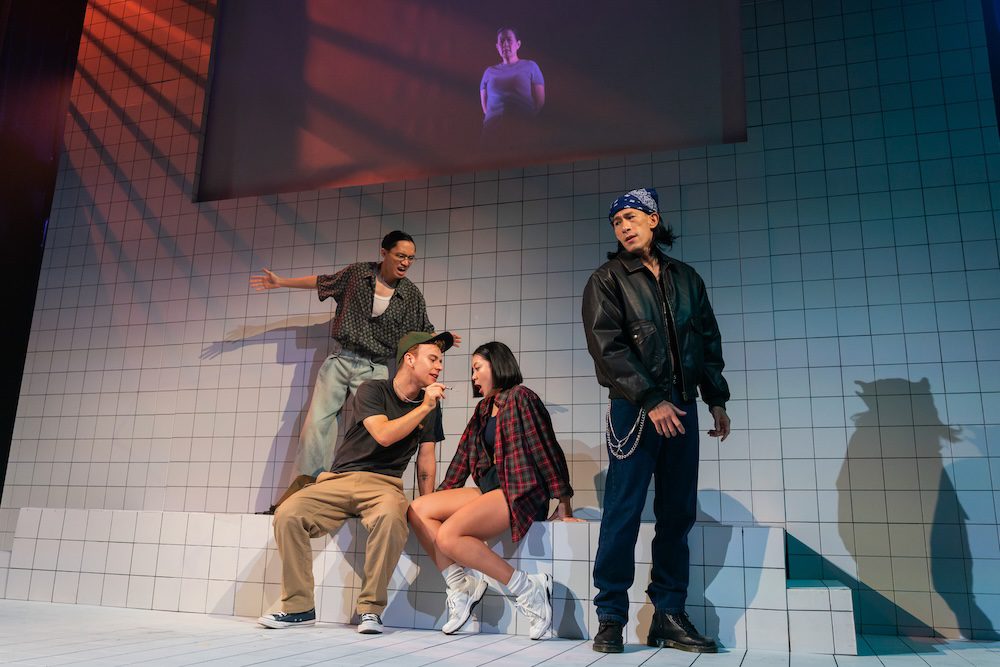
When Candice’s mum burns all her tapes and magazines in a fit of moral panic, Candice finally snaps and embarks on a night-long bender to end all benders. In the darkness, she sees the Singapore she’s been craving all this time: punks in a sweaty mosh pit, a police raid, and a seductive American boy with diplomatic immunity and an endless supply of happy pills…
Punchy, unhinged, and pulsing with youthful anger, The Serangoon Gardens Techno Party of 1993 is the story of one young woman raging against the machine. How brightly can you burn without killing yourself and the people around you? Directed by Sim Yan Ying “YY”, this provocative new play by Joel Tan is a love song to the crazy Singapore of the 1990s, when rebellion steamed beneath the orderly surface of the city.
Playwright: Joel Tan
Director: Sim Yan Ying “YY”
Dramaturg: Cheng Nien Yuan
Set Designer: TK Hay
Lighting Designer: Alberta Wileo
Costume Designer: Johanna Pan
Hair Designer: Ashley Lim
Make-Up Designer: Bobbie Ng
Cast:
- Coco Wang
- Karen Tan
- Jackson Hurwood
- Shane Mardjuki
- Teoh Jun Vinh
The interview was with Joel (the playwright) and YY (the director).
What does The Serangoon Gardens Techno Party of 1993 mean to you?
Joel: It feels like dipping into a very hazily-remembered time of my life and trying to capture a Singapore that exists as a fragmented film in my mind. But in the present moment, it’s also a freedom cry for all the young people who’ve ever felt pressed down by life in this city, and also a sobering look at the way the conditions of repression here cause us to hurt ourselves and those around us.
YY: When I first read the play, my instinctive reaction was: oh my god, I’m Candice. As it turns out, I wasn’t the only one and several others I’ve spoken to feel the same about the play’s central character as well. It’s rare to encounter a work that captures the Singaporean“siaozhabor” energy so vividly and truthfully — the chaos, humour, desires, angst, contradictions — all in a way that feels complex, non-judgmental, and full of heart. To me, this play is a mirror for all the women in Singapore who’ve been called “too much”, and it does so with love and audacity.
What was the ideation and writing process like?
Joel: I wrote this in 2020 during the pandemic during my time with the Royal Court writers group, which that year was held internationally and on Zoom. I wrote it initially as a way to try and figure out ways of describing my colonized brain in new ways (prior to this I’d been writing a lot of historical plays). As I wrote it, I realised the way through was to follow Candice the main character on this single day and see what she wanted; to stay with her desires, and to stay with the consequences of her actions. It ended up surprising me at many turns because I literally never fully knew what was going to happen next.
What was the production process like?
Joel: YY can speak more to this, but for me I think it’s been such a delight handing this play to YY, who I think is one of the brightest, most hardworking directors on the scene currently, and she’s run a really tight ship full of imagination and joy and precision and ambition.
YY: It started in 2022 when Joel sent me a draft of the play — he thought it might be something I’d really connect with, and he was right. We had a few early chats about the characters, themes, and questions it raised, and it stayed with us for a while. Last year, Wild Rice decided to platform it and that was when things really started moving. We went through a casting process and found our five incredible actors — Coco, Jackson, Jun Vinh, Karen, and Shane — and brought in designers who felt like the right fit for this world.
In January this year, we held a two-day script workshop with the cast, reading through, discussing, and interrogating the text. Joel took the feedback away and refined the script, while I began building the world with the design team — shaping the play’s aesthetic language, soundscape, and textures to evoke the spirit of the era and also the quality of Candice’s memory and film.
In June, we held a three-day ensemble workshop where we experimented with the possibilities of staging and performative languages. The actors brought in incredible instincts and ideas, many of which made their way into the final staging.
In September, we began an intensive five-week rehearsal process where everything crystallised — staging with precision, integrating design, and doing plenty of full runs as we refined and nuanced each moment. Then came our tech week, which was both exhilarating and brutal as we put everything together in the theatre within just five days. It was a true team effort, and seeing all the elements collide into this strange, beautiful world was incredibly rewarding.
What were some challenges you overcame during the production?
Joel: I think the biggest one was the big mystery of whether or not people would relate to a play like this, which is so pugnacious and whose main character is often quite annoying. I think it’s to the cast’s credit, particularly Coco who plays Candice, that there’s been so much deeply felt connection to the play since we’ve opened.
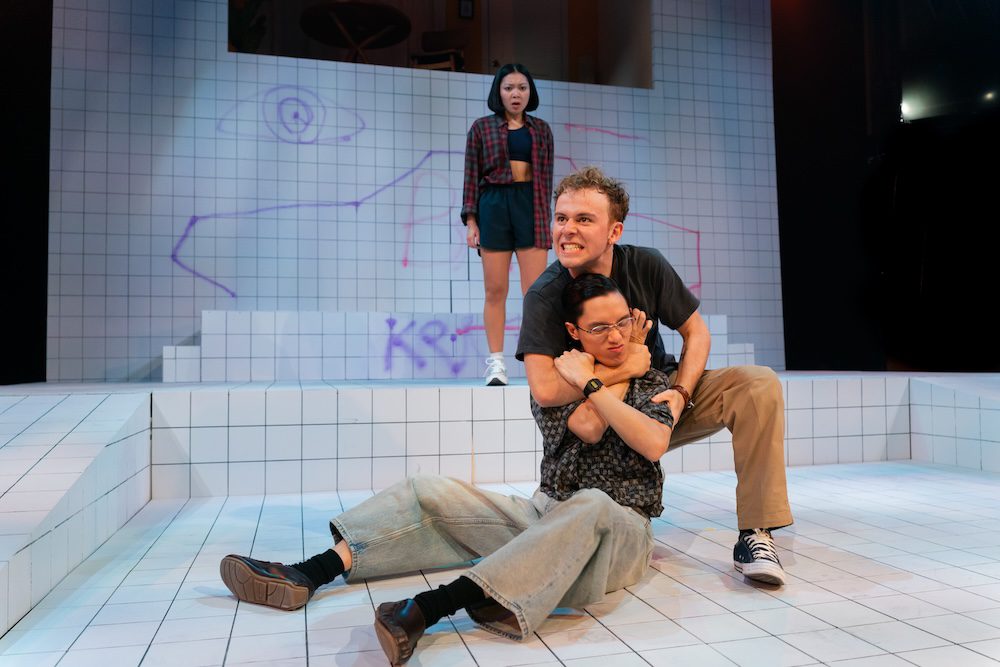
YY: Honestly, one of the biggest headaches was staging the spray-painting scene. It’s such a pivotal moment and I didn’t want to stylise it with projections or pre-recorded effects; it needed to happen live. But that meant finding a spray that was fume-free, odourless, safe for both actors and audience (and the restaurant next door), as well as removable from the walls after every show. We went through rounds of research, product tests, and trials before finally landing on something that worked… although it was still unpredictable at times, and there were nights it gave me genuine anxiety. Theatre magic often looks effortless, but sometimes it’s built on pure persistence and problem-solving.
What is your favourite part of The Serangoon Gardens Techno Party of 1993?
Joel: There’s a big formal shift in the play that I’m quite proud of having discovered as I was writing, that taught me a lot about how a play can hold many different realities and genres at once. Also all the swearing and bad behaviour I guess.
YY: It’s so hard to pick just one. When I watch it with the audience, it’s probably the Orchard Road meet-cute between Candice and Jun Hao, the young policeman — because the crowd always has such strong and engaged reactions. Personally, I love the scene where Candice flirts with her PE teacher as it reminds me of my younger self, fumbling with desire and embarrassment. And of course, the final scene always hits me: adult Candice, in all her guilt and self-loathing, searching for forgiveness and peace.
What are your best memories or favourite aspects of 1990s Singapore?
Joel: A&W ice cream floats and Coney dogs, strata malls that were somehow already faded, that long mosaic mural on Orchard road, and the way the days seemed to stretch out forever…
YY: I was a very young kid then (four years old and below) so my memories are fragmentary but warm: slower days, phone calls on the home line, playing Little Rascals on my dad’s old Windows computer, car-watching with my mum, and home karaoke sessions with Laserdisc collections. There was no mobile phone, no constant connectivity — just a kind of unhurried simplicity that I miss.
What have your most rebellious streaks been like?
Joel: Most of my rebellion involved being very rude to my parents and relatives because I thought I was smarter than them. I wasn’t.
YY: I’d have to tell you that over a drink. Let’s just say, like Candice, it has involved policemen as well.
What’s the most retro thing you own?
Joel: A pair of Fire King jadeite teacups that are identical to the ones that Maggie Cheung drinks coffee out of in IN THE MOOD FOR LOVE.
YY: Probably my parents’ CD collection of oldies from the 60s — The Platters, The Cascades, Skeeter Davis… The CDs themselves aren’t ancient, but they’ve been around for as long as I can remember, and the songs are woven into my childhood.
What do you hope audiences take away from The Serangoon Gardens Techno Party of 1993?
Joel: I don’t think this is a didactic play as such, but I always hope for my plays to leave people with a little nugget of emotional complexity at the end—that feeling you get when you watch another person go through something really intense, and you feel so sharply the mystery and tragedy of human life.
YY: The Serangoon Gardens Techno Party of 1993 is, to me, a battle cry for freedom, and a love letter to anyone who’s ever felt trapped by the weight of expectation. It’s for all the Candices out there who’ve been told they’re too much, too loud, too difficult, when really, they’re just bursting with life. And to everyone who knows a Candice — who loves one, or is still trying to understand one — I hope this play helps them see her a little more clearly, and maybe love her a little more fiercely. She’s never as far from us as we think.
“How brightly can you burn without killing yourself and the people around you?”
Joel: Not very brightly at all, in a tight, hermetic environment…
YY: Honestly, I’m still experimenting with wattage.
Here’s hoping for a restaging so I can catch it!
The Serangoon Gardens Techno Party of 1993 ran from 17 October to 1 November 2025.
Leave a Reply